Skip to content
Join the Academy today. Start out in combat sports.MMA, Brazilian jiu-jitsu and classes for children.Three levels, from the beginner group to the competitive one.Group classes from Monday to Friday.Wilanów, Wiertnicza 26A.
A combat sports academy in Wilanów, Warsaw. MMA and Brazilian jiu-jitsu for adults, plus classes for children.

Polish MMA archive

The first cage fight and 45 minutes with no winner

The cage was built by a blacksmith outside Warsaw. There was no time limit and no rounds. After 45 minutes neither fighter would submit. This is how Mirosław Okniński started building Polish MMA.

2002

What is known about this fight

Where
Body Show fair, Warsaw
How long
About 45 minutes
Purse
1000 złoty
Result
A draw, 500 złoty each

Archive footage

Highlights from the archive

Material from Mirosław Okniński's archive. It is over twenty years old and the quality reflects that.

Before there was a cage

Today nobody in Poland is surprised by the cage. MMA fighters appear on television, compete in the biggest organisations in the world, and children and adults can simply join a club and train mixed martial arts.

At the beginning it looked completely different. When Mirosław Okniński started thinking about developing Vale Tudo and MMA in Poland, not everyone was convinced that this was the direction combat sports should take.

Karol Matuszczak was developing Brazilian jiu-jitsu in Poland. Mirosław knew him from seminars and camps. Both were interested in what works in a fight, but they saw the way to promote the sport differently.

Matuszczak passed on to Okniński what the Brazilians had learned. Sport Brazilian jiu-jitsu was well received. Cage fights, on the other hand, had a bad reputation. Mirosław drew a completely different conclusion from that. He did not want to give up the cage.

„I was always interested in what actually works. It did not matter how it was seen back then. I wanted to develop MMA and Vale Tudo.”
Mirosław Okniński

Jakubowski against Teresiewicz

Mirosław already knew Grzegorz “Jakubek” Jakubowski from the combat sports scene. A second fighter was needed.

After a notice went out, Temistokles Teresiewicz came forward, connected at the time with the police and a counter-terrorism unit. The matchup alone had an interesting feel to it.

Jakubowski came from Gdynia. He was accompanied by a group connected with Arka Gdynia, some of whom also trained in his circle. On the other side of the cage stood a police officer.

There was, though, no artificially written marketing storyline. They were to walk into the cage and fight.

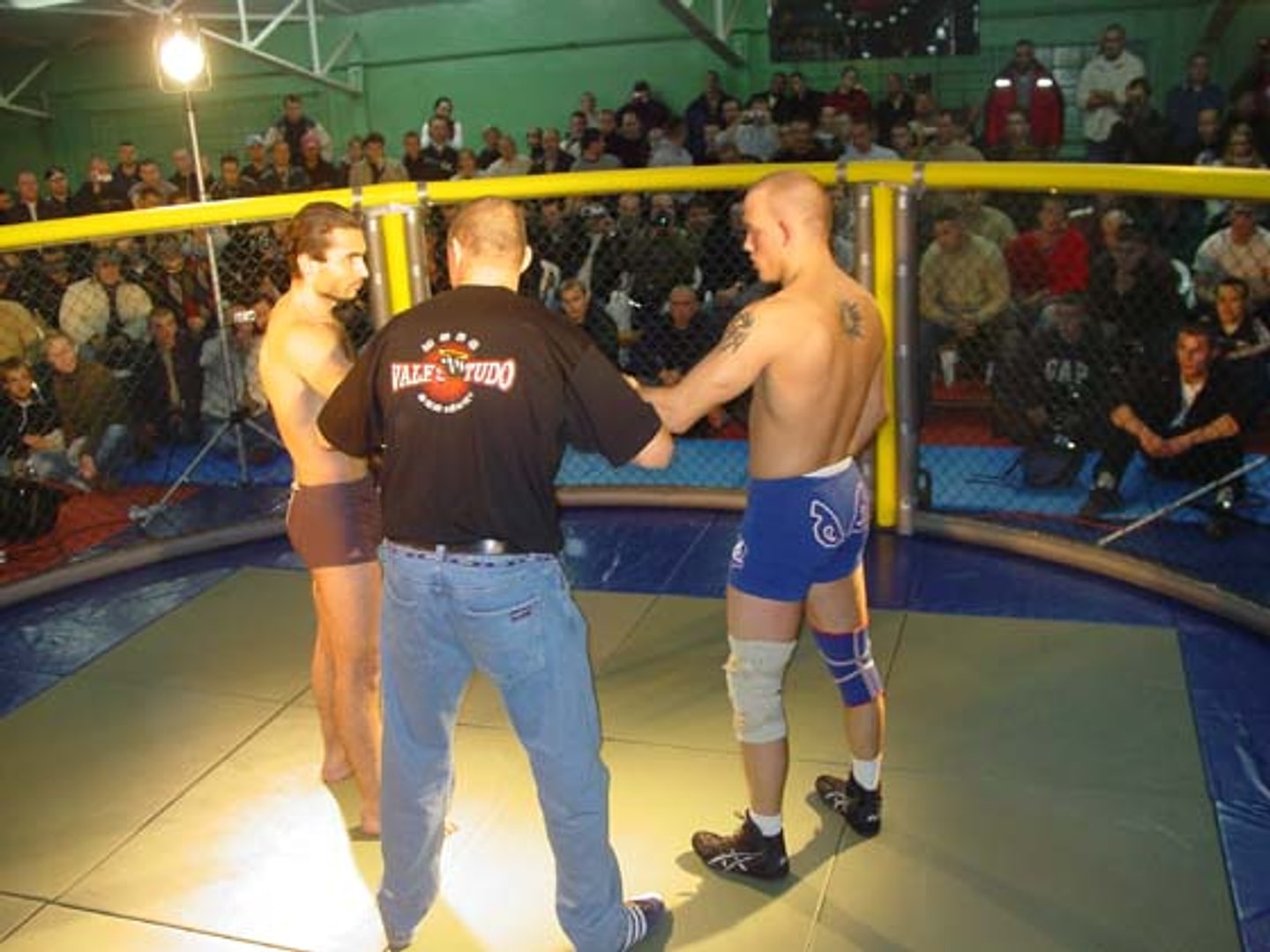
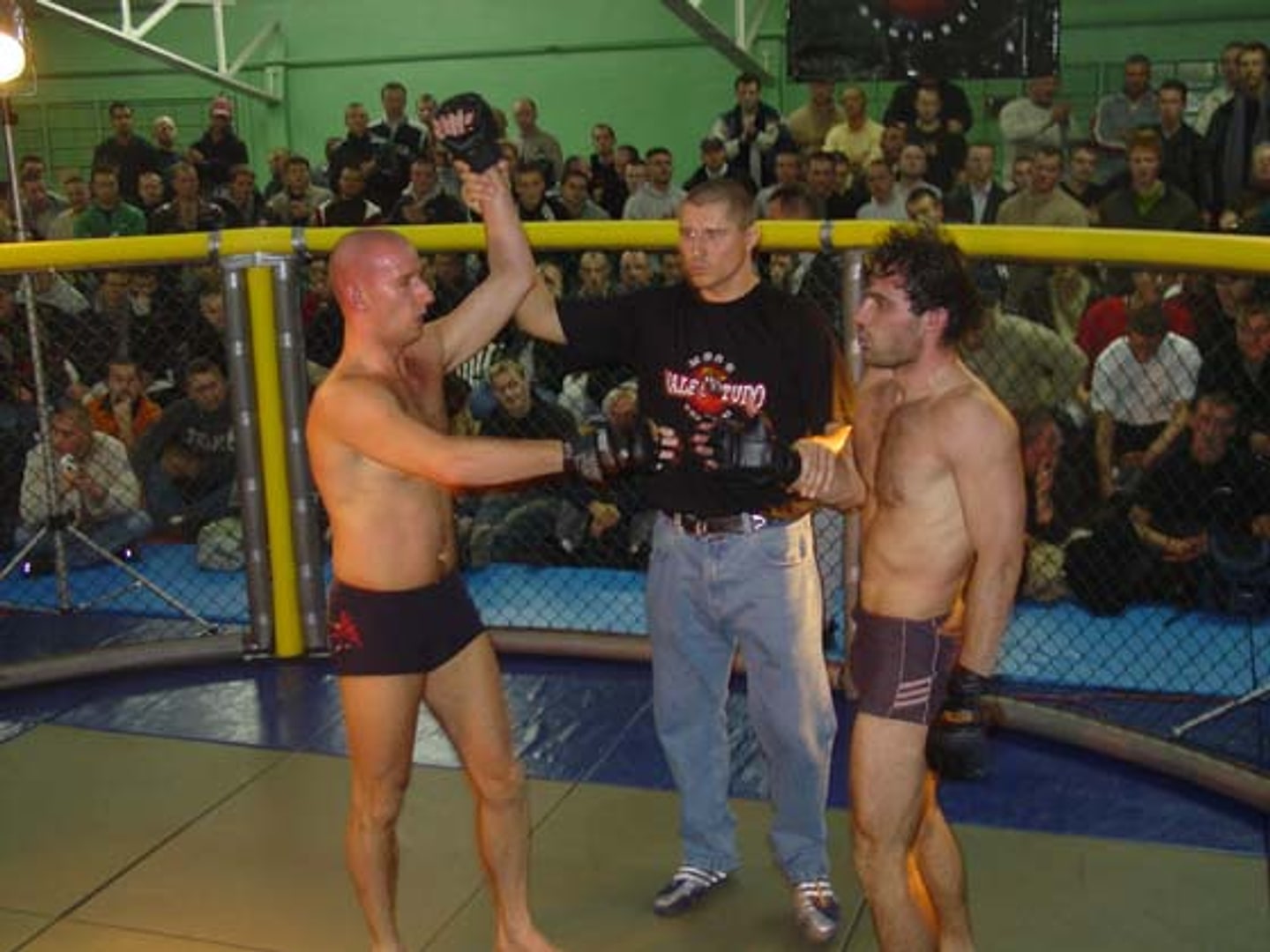
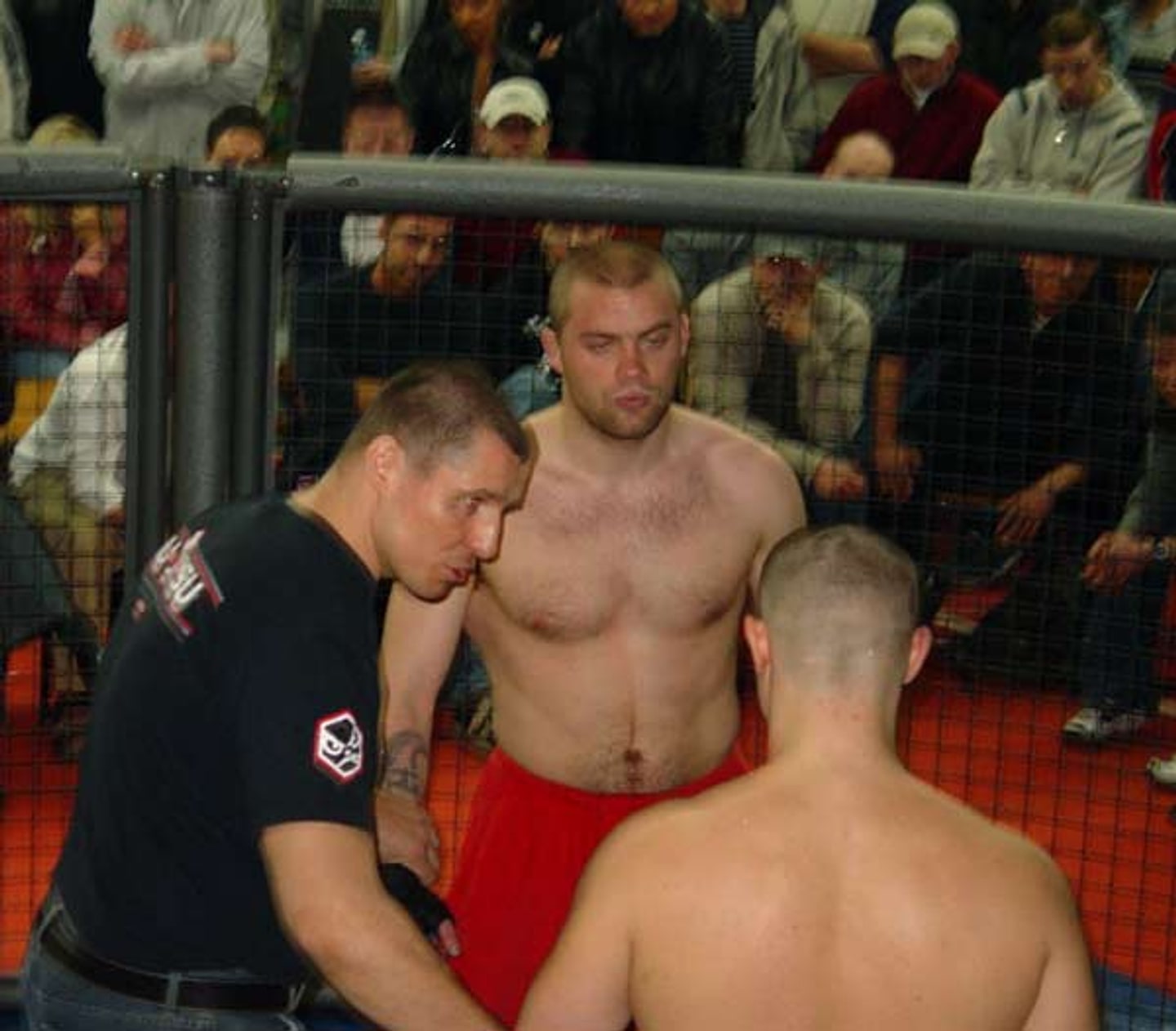
A referee in a black shirt giving instructions to two fighters by the cage fence, the crowd behind them
Instructions before the bout

A bodybuilding fair and the first cage

The bout was organised during the Body Show fair in Warsaw. Okniński met the organisers through the circle around the magazine „Kulturystyka i Fitness: Sport dla Wszystkich”. The Body Show organiser suggested putting on a demonstration of the new discipline as part of the fair.

There was one problem. A cage was needed. You could not simply order one from an MMA equipment shop. That market barely existed.

So the cage was made by a blacksmith outside Warsaw. Jacek Foltyn, a fighter training with Mirosław at the time, helped make it happen. As Okniński recalls, Foltyn put down the initial deposit and encouraged him to run the fights. Later it turned out the rest of the money had to be found on his own.

The cage was nothing like today’s structures. Thick tubing. Hard metal fencing. No soft finishing at all. Mirosław recalls that the first fights on it were rough not only because of the fighters. The fence itself could cut them. Only later was it replaced with a soft one.

Interestingly, according to Okniński that structure still exists and is now in a club connected with his former branch in Grudziądz. If this can be confirmed and photographed, it will be one of the most important physical objects in the history of Polish MMA.

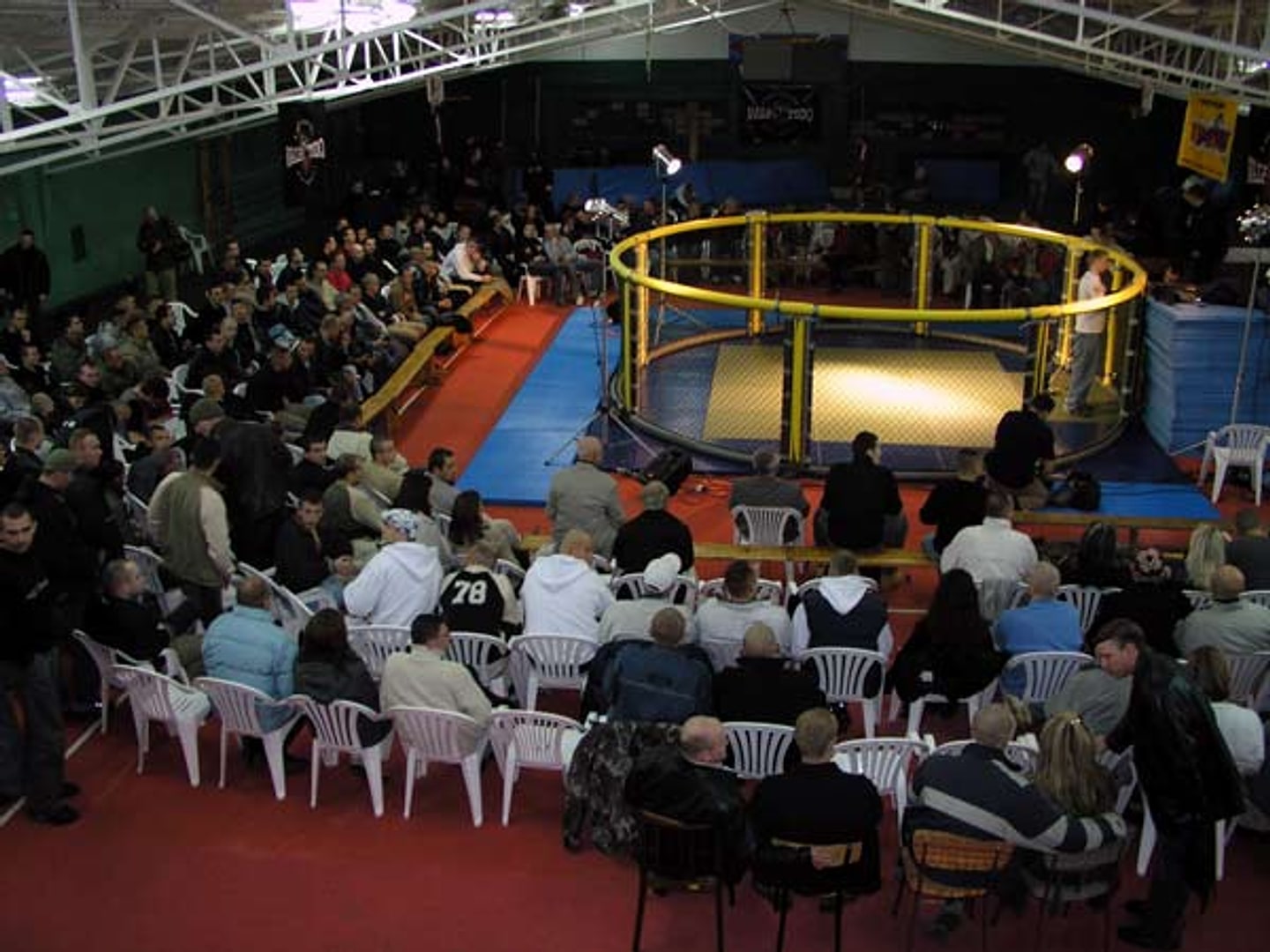
A yellow cage set up on mats in the middle of a sports hall, rows of white chairs with spectators around it
The cage set up in the middle of the hall

The rules? Almost everything allowed

MMA today has detailed rulebooks. That bout looked different. There was no time limit. There were no conventional rounds. The premise was simple. Someone was supposed to win.

Okniński recalls that what was banned above all were attacks to the eyes, the groin and the spine. During the fight one more boundary appeared. Head strikes. When one of the fighters used his head, Mirosław, as the referee, decided that was already too much.

Beyond that the fight stayed very open. Years later Teresiewicz described it as a contest under rules close to the early UFC, with no weight or time limits.

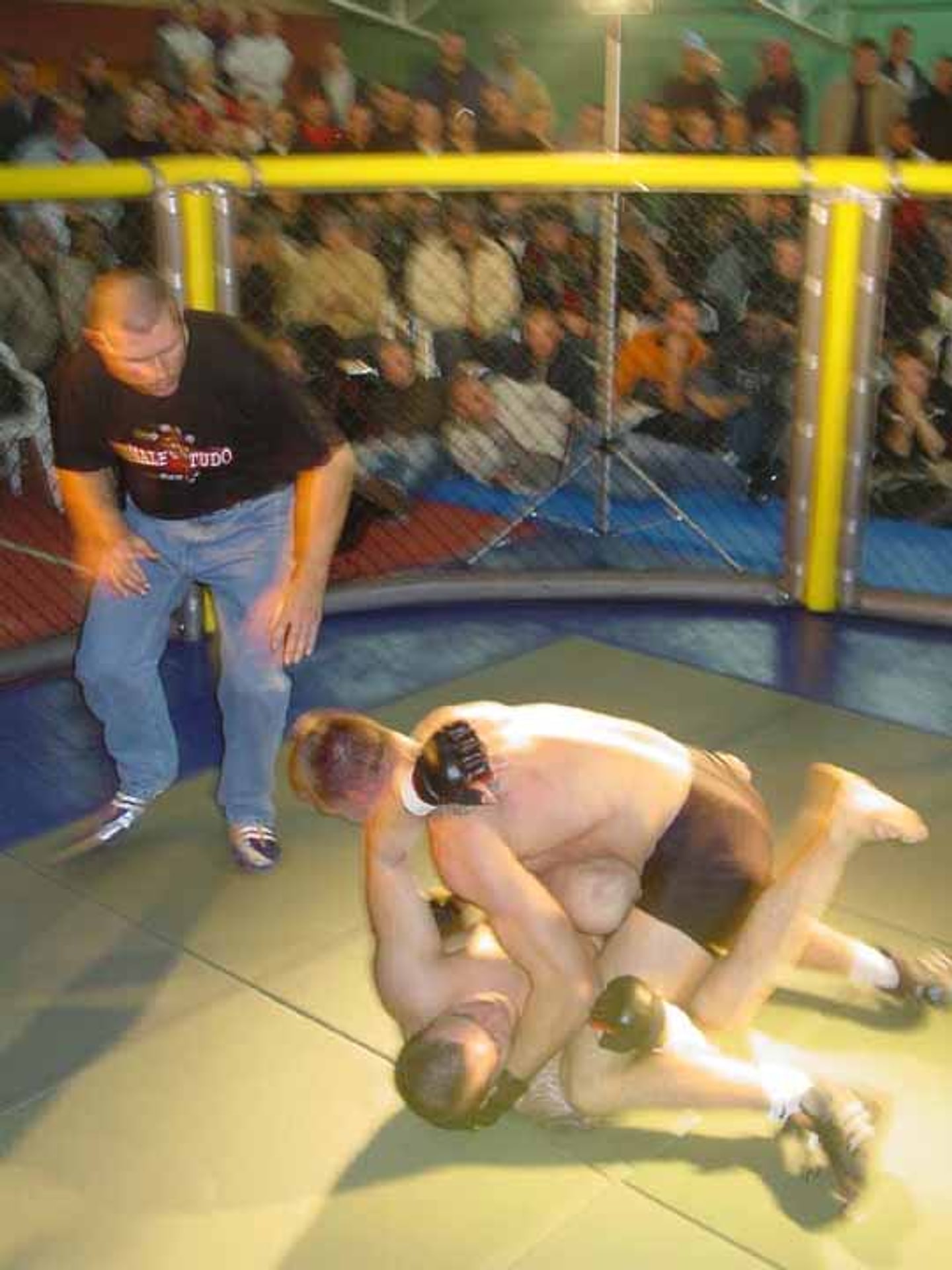
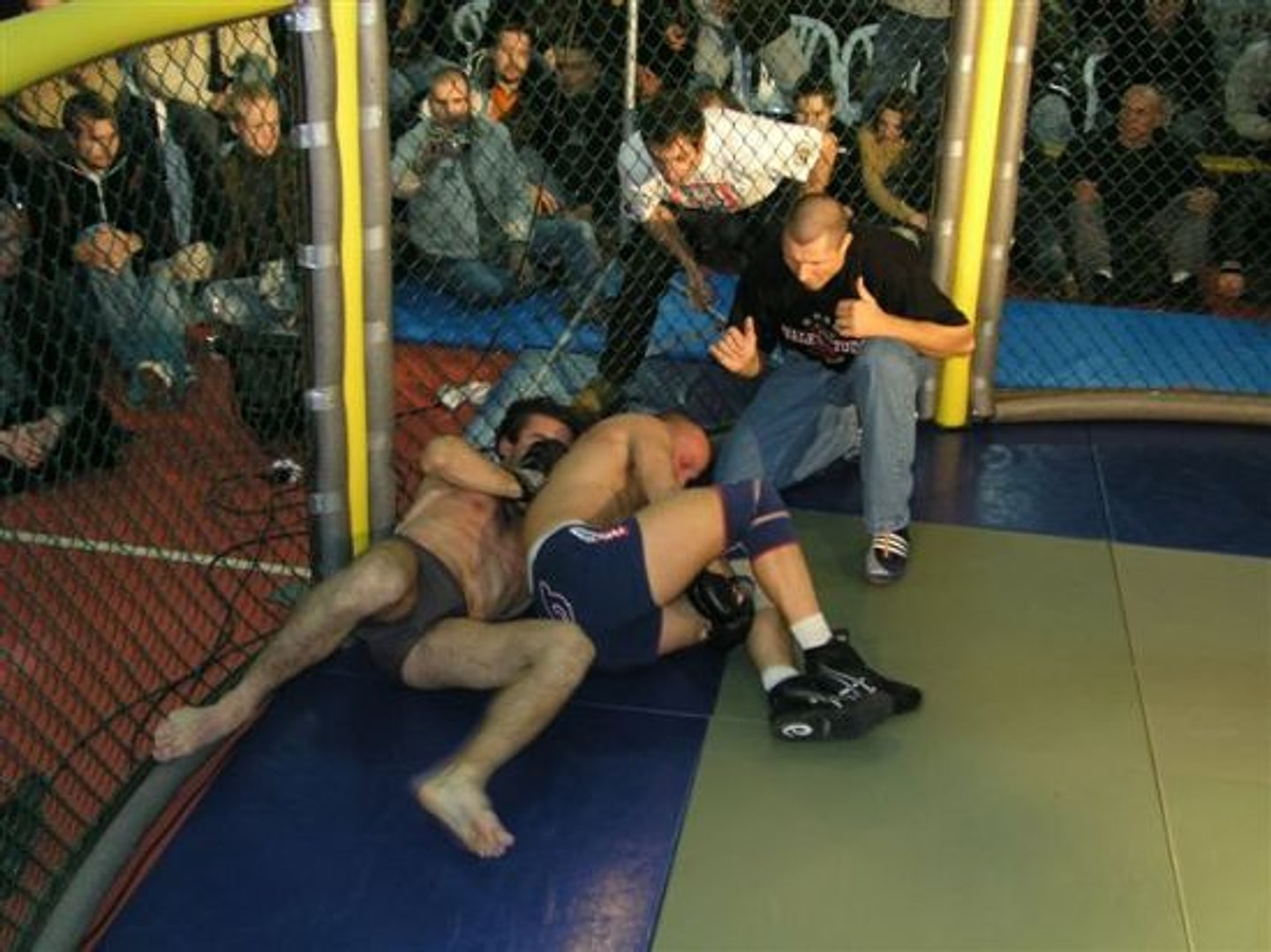
Two fighters grappling on the mat inside the cage, a referee in a Vale Tudo shirt crouching right beside them
Grappling on the ground, the referee right next to the fighters

A thousand złoty for the winner

The purse was a thousand złoty. Today that does not sound like a big prize pot. Back then it mattered.

The problem came after 45 minutes. Nobody had won. Both fighters were completely spent.

In the end Okniński made the call. A draw. The thousand złoty was split. Five hundred each. Jakubowski was not pleased. The winner was supposed to get the whole thousand. Except there was no winner.

„I ask one of them: do you submit? No. I ask the other: do you submit? No. And you could see they had nothing left.”

Mirosław Okniński

A hundred people and no great “wow”

Looking back it is easy to turn this fight into a huge event. At the time it was not one. Body Show was above all a bodybuilding event.

People were walking between the stands and attractions. They saw the cage. They stopped out of curiosity. Jakubowski had a group with him from Gdynia. Fighters from Okniński’s club came. Mirosław estimates that around a hundred people may have watched the fight.

There was no big television. There was no big promotion. There was also no immediate sense that something had just happened that a dozen or so years later would be remembered as one of the beginnings of Polish MMA. A report appeared, among other places, in the magazine „Kulturystyka i Fitness: Sport dla Wszystkich”.

The real commotion only started later.

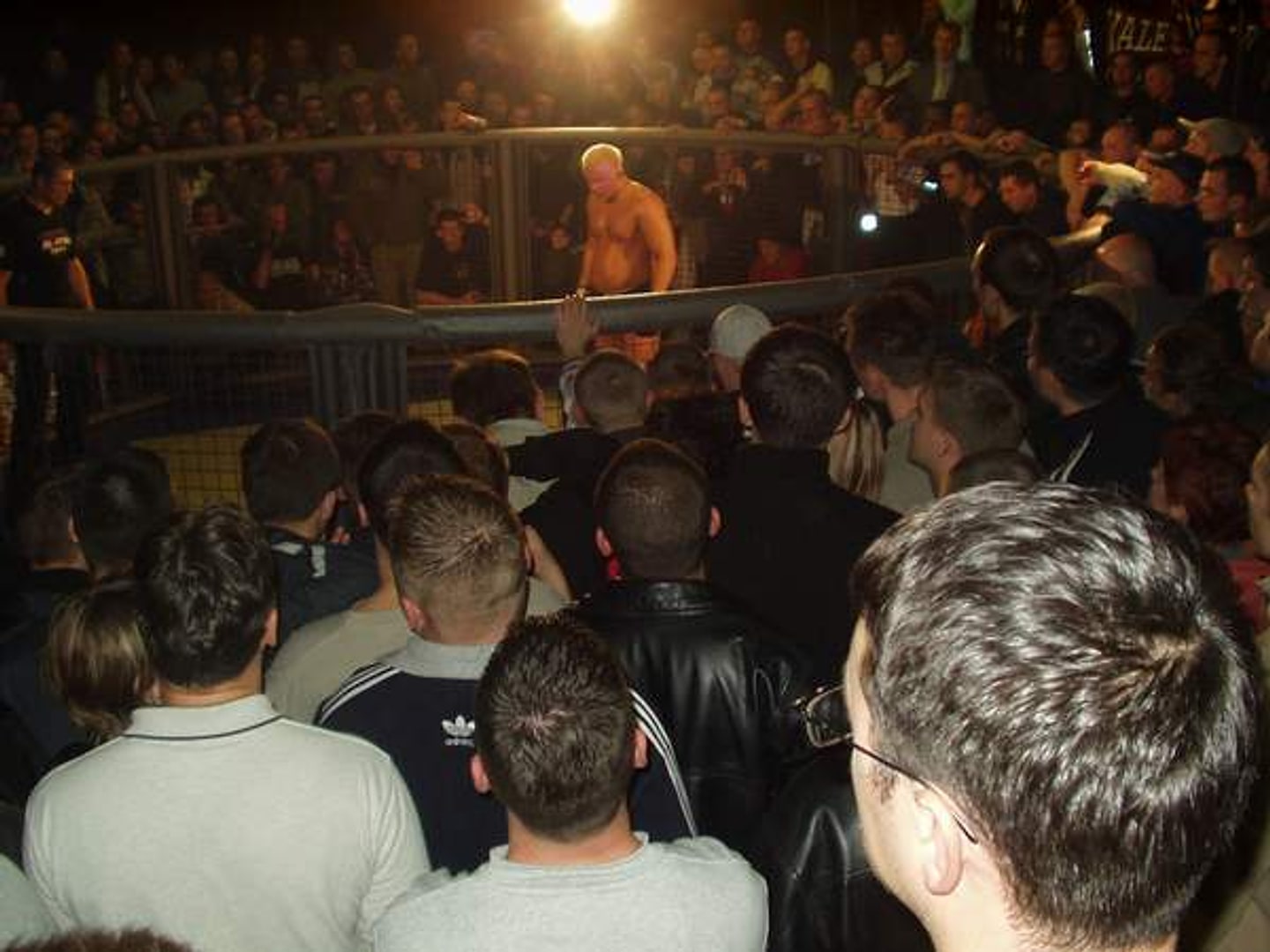
A fighter standing in the cage, the crowd pressed tight around the fence, a Vale Tudo banner behind them
The crowd right up against the fence

“Only animals fight in a cage”

When Okniński started running further tournaments in Warsaw, the subject grew much bigger. The fights began to be presented not as a new sporting discipline but as brutal contests between people connected with the football supporters’ scene.

Problems appeared. Mirosław recalls being summoned to a ministry and warned to stop organising cage fights.

The cage was then a symbol of everything people did not understand about the new sport. It was brutal. It had bad associations. According to its critics it did not belong in sport. Okniński did not give up.

„I had a lot of trouble because I ran fights in a cage. But it took hold. Today it is alive.”

Mirosław Okniński
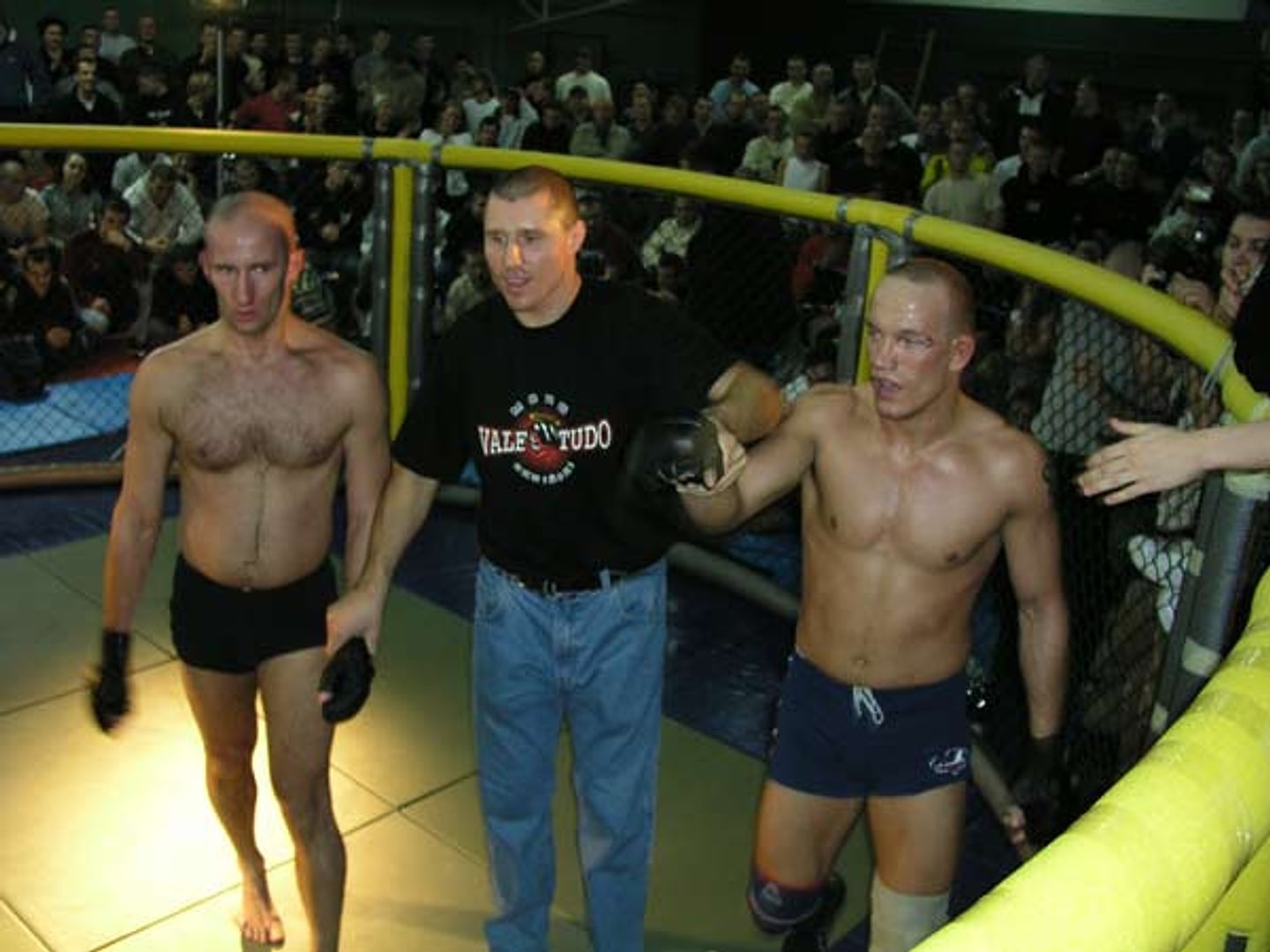
A referee in a Vale Tudo shirt standing in the cage between two fighters after the bout
In the cage after the bout

And yet MMA in Poland began earlier

The story is not entirely black and white. As early as 2000 Karol Matuszczak fought Tomasz Jamróz at an event in Jaworzno. It was one of the first contests in Poland to bring different fighting styles together.

Okniński points, though, to an important difference. That contest was held under more restricted ju-jitsu rules. The Jakubowski against Teresiewicz fight was meant to be something else. A cage. Vale Tudo. No time limit. Minimal restrictions.

That is why Mirosław considers it the start of real, official MMA in Poland. The definitions are open to debate. One thing, though, is not. It was out of experiments like this that the scene we know today grew.

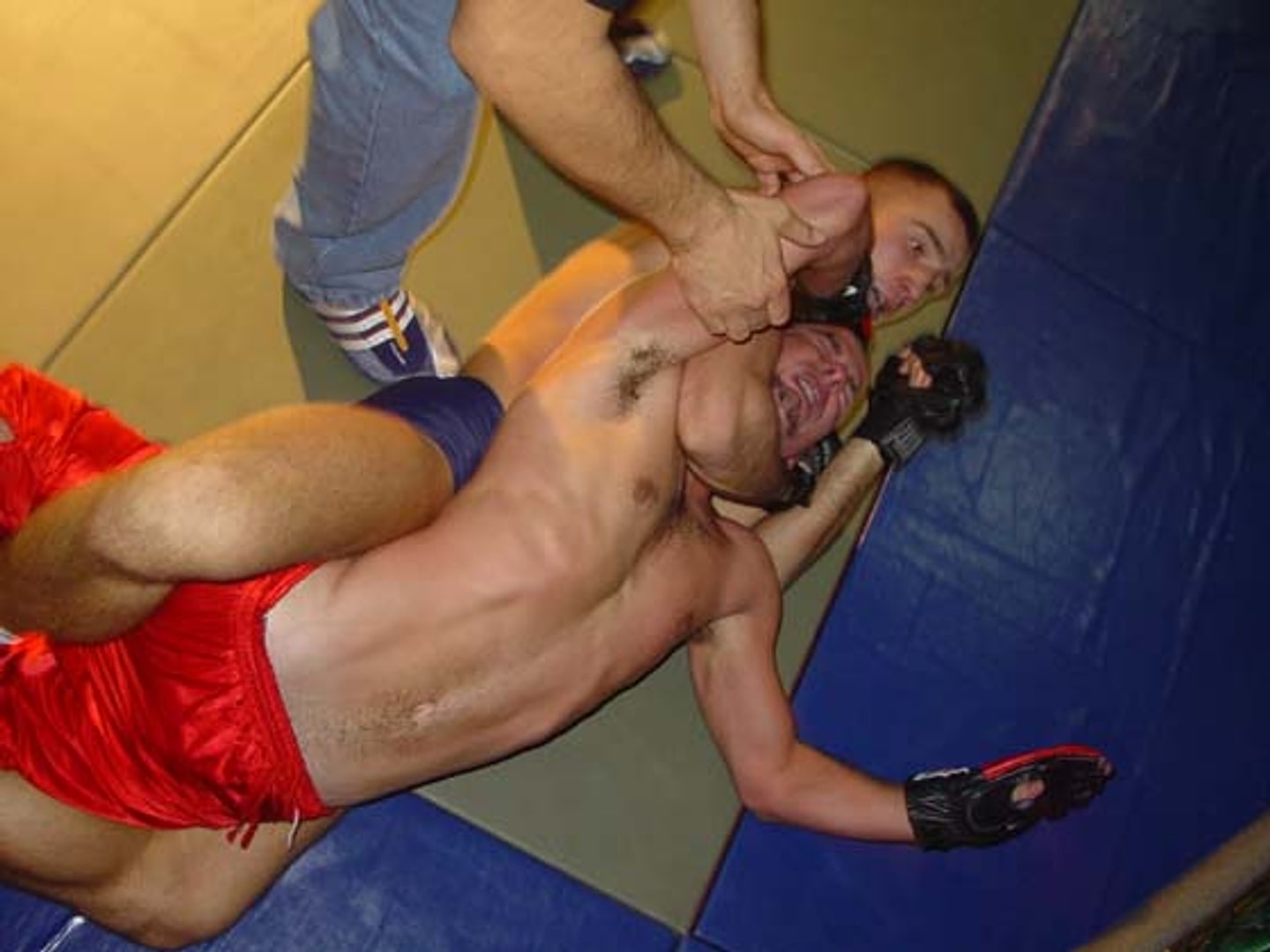
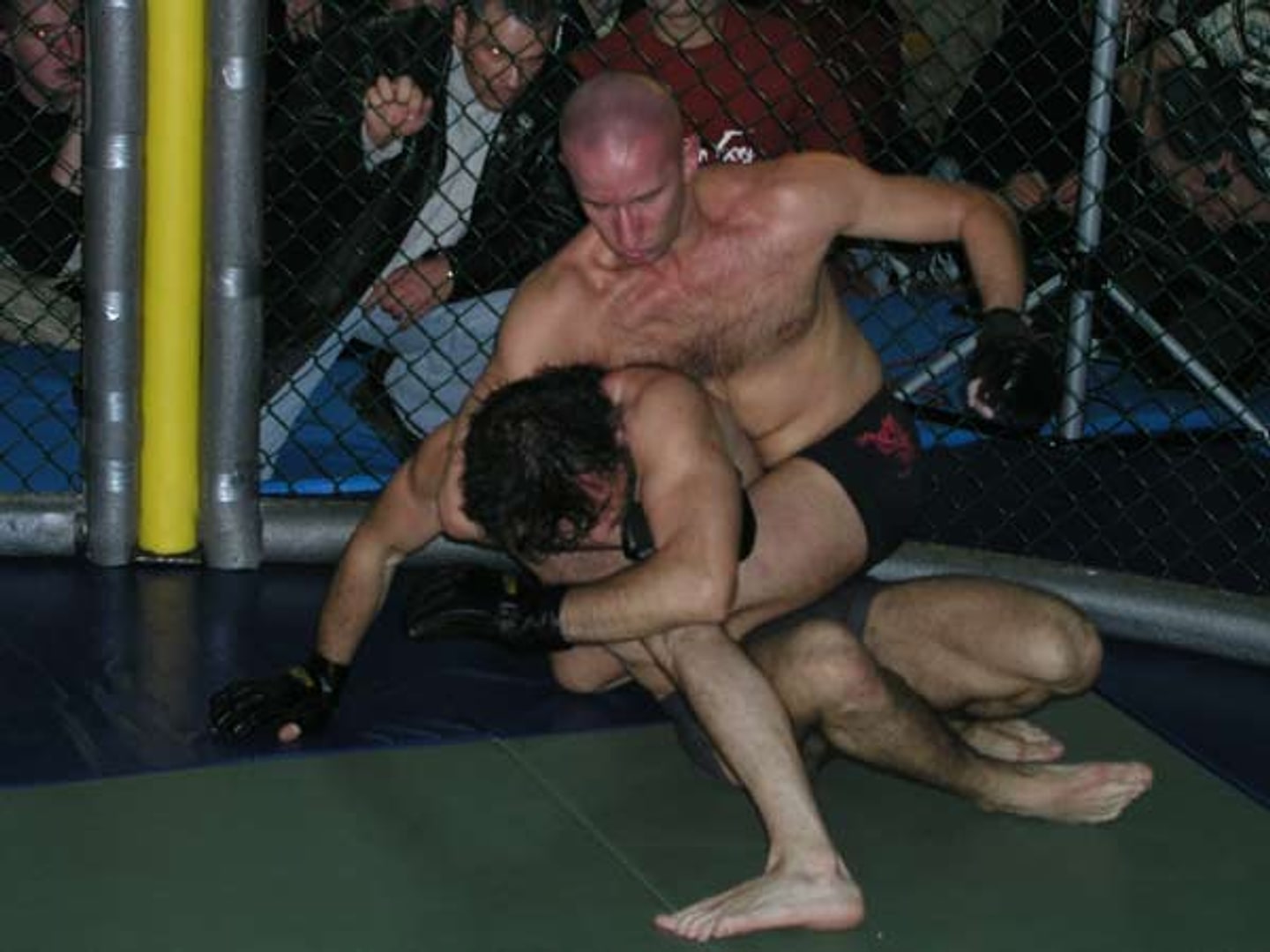
A fighter applying a choke to his opponent on the mat, a referee standing beside them
A choke on the mat

The cage is still standing somewhere

The best part of this story is that not everything stayed in the archives. According to Mirosław the first cage, made by a blacksmith outside Warsaw, is still standing in Grudziądz.

Jakubowski is alive. Teresiewicz talked about this fight for years. Jacek Foltyn, who helped build the cage, is alive. There are people from the first club. There are former staff of the magazine „Kulturystyka i Fitness: Sport dla Wszystkich”.

Somewhere there may still be photographs. Old issues of magazines. VHS tapes. Negatives. Material nobody has looked at for twenty-odd years.

And that is exactly why we are not closing this story. We are only starting to document it properly.

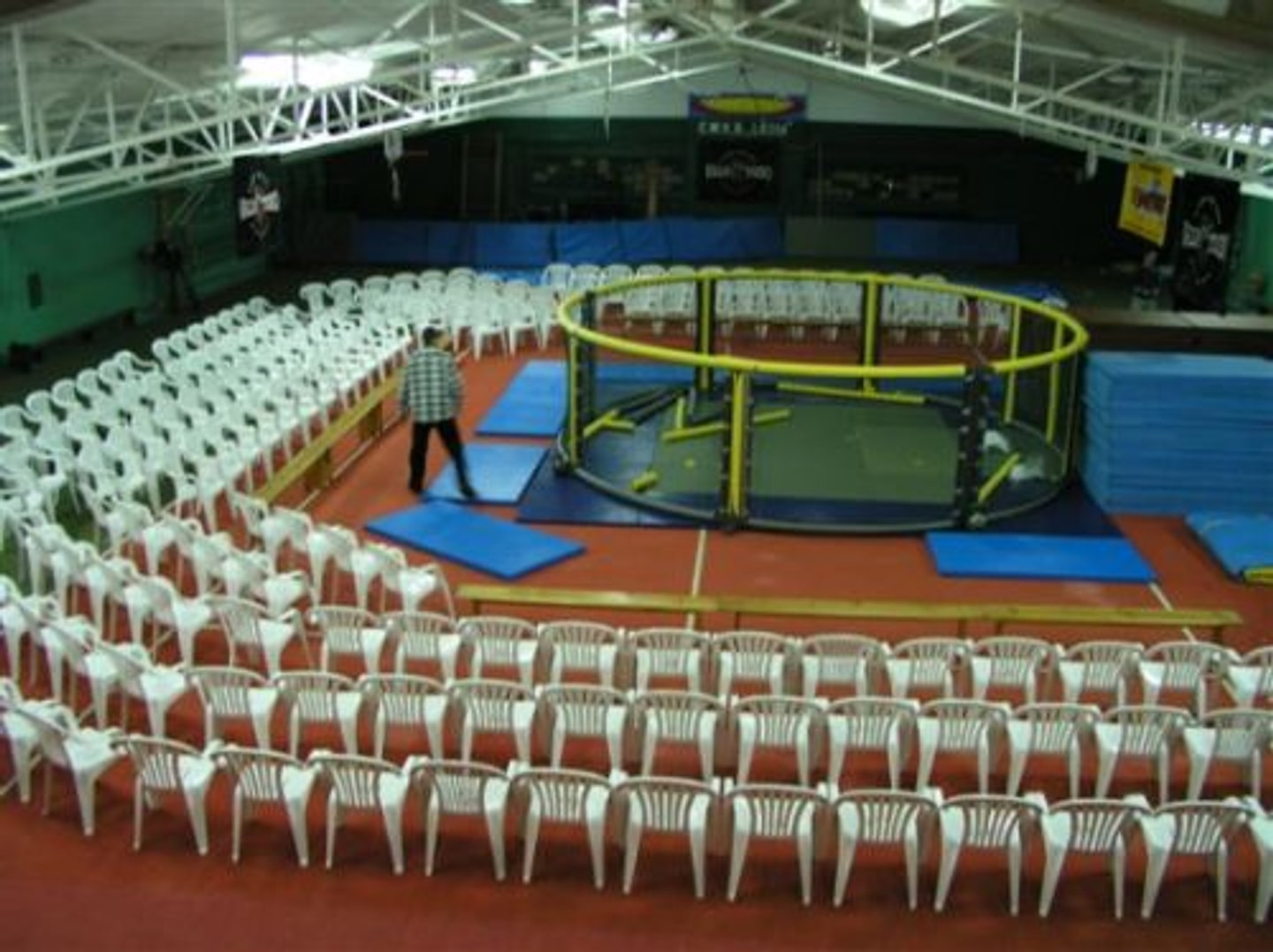
An empty hall before the tournament: the cage in the middle and empty rows of white chairs around it
The hall a few hours before the tournament

From the archive

Photographs from the first tournaments

Photographs from Mirosław Okniński's private archive. They carry no captions and no dates, so the captions here say only what can be seen in the frame.
  • A yellow cage set up on mats in the middle of a sports hall, rows of white chairs with spectators around it
    The cage set up in the middle of the hall
  • The referee standing between two fighters in the cage just before the bout starts
    Moments before the bout
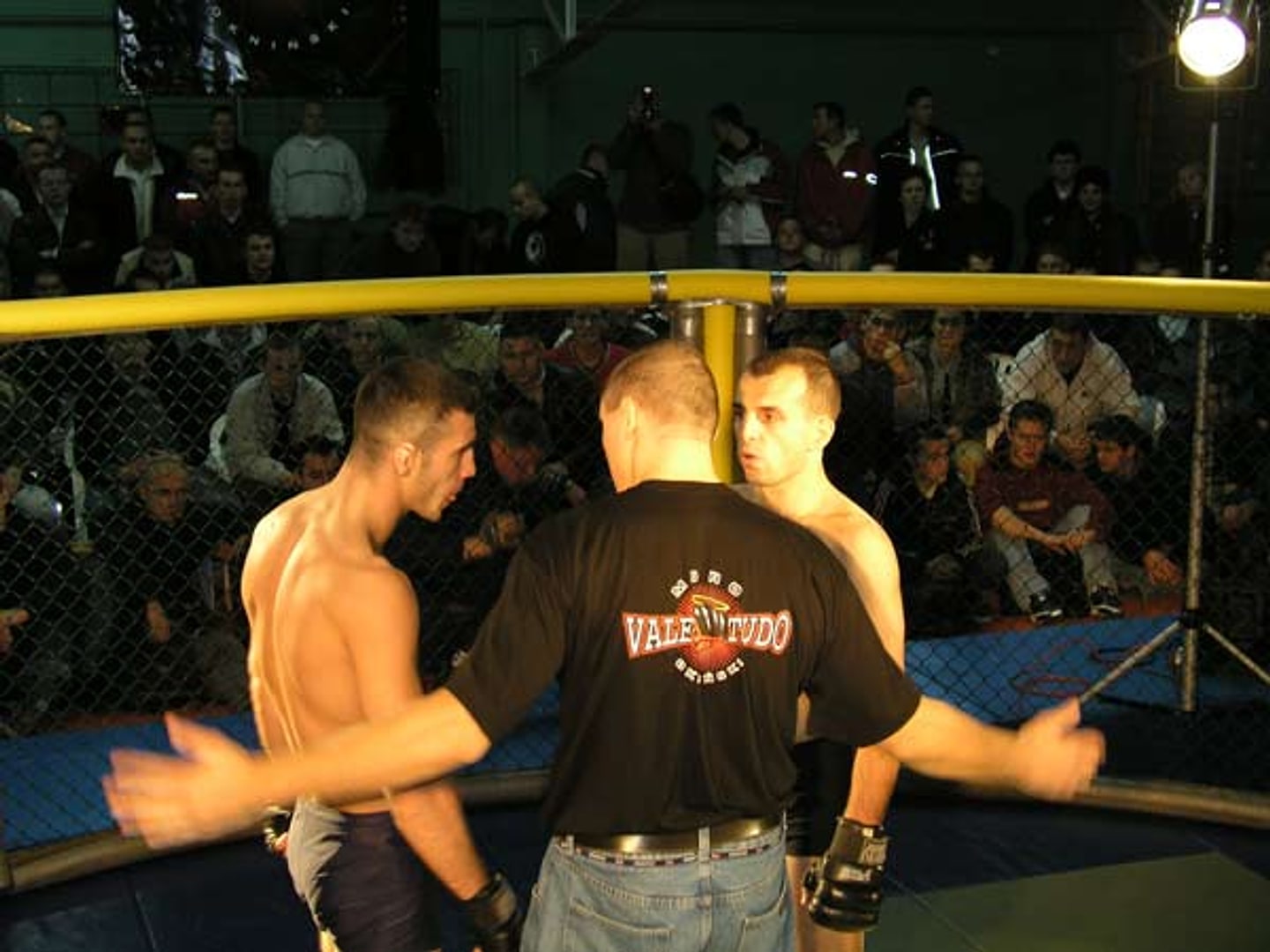
  • A referee in a Vale Tudo shirt separating two fighters in the cage with his arms
    The referee separating the fighters
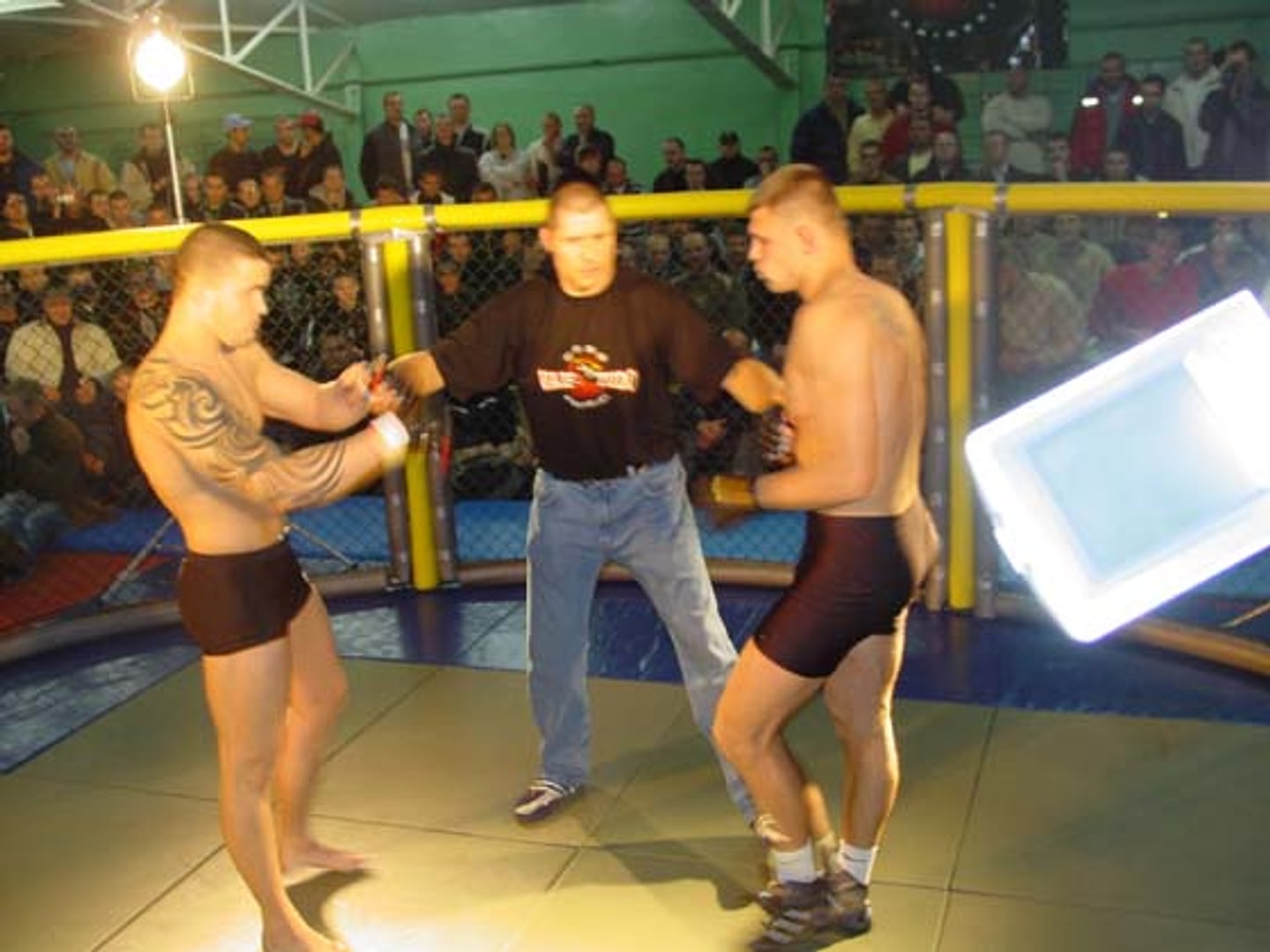
  • Two fighters exchanging strikes in the cage, the referee standing between them
    An exchange of strikes
  • Grappling right against the cage fence, the crowd sitting on the other side of the mesh
    Grappling right against the fence
  • A fighter controlling his opponent on the ground by the fence, spectators watching close up through the mesh
    Control on the ground
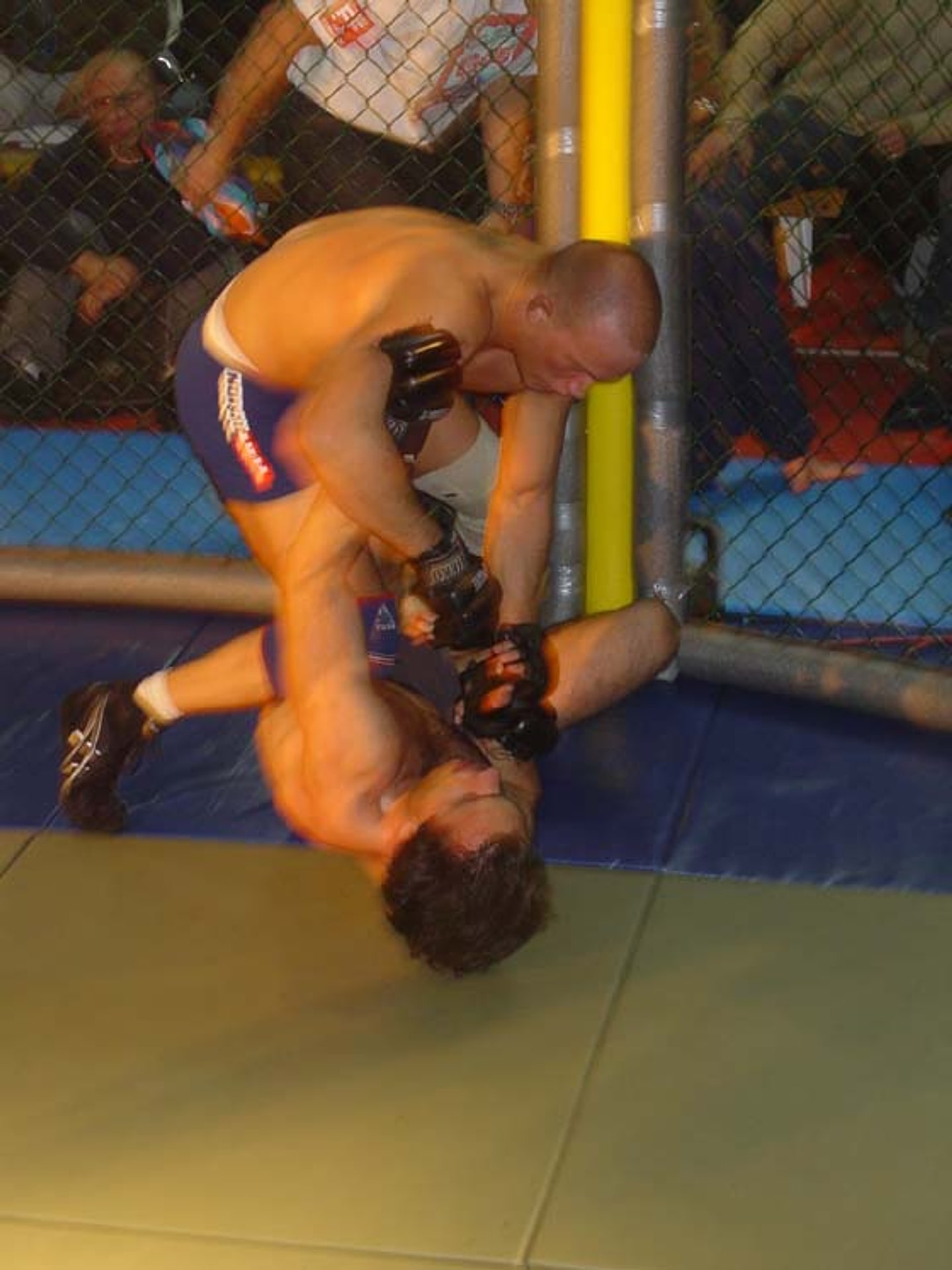
  • A fighter landing strikes on the ground by the cage fence
    On the ground, by the fence
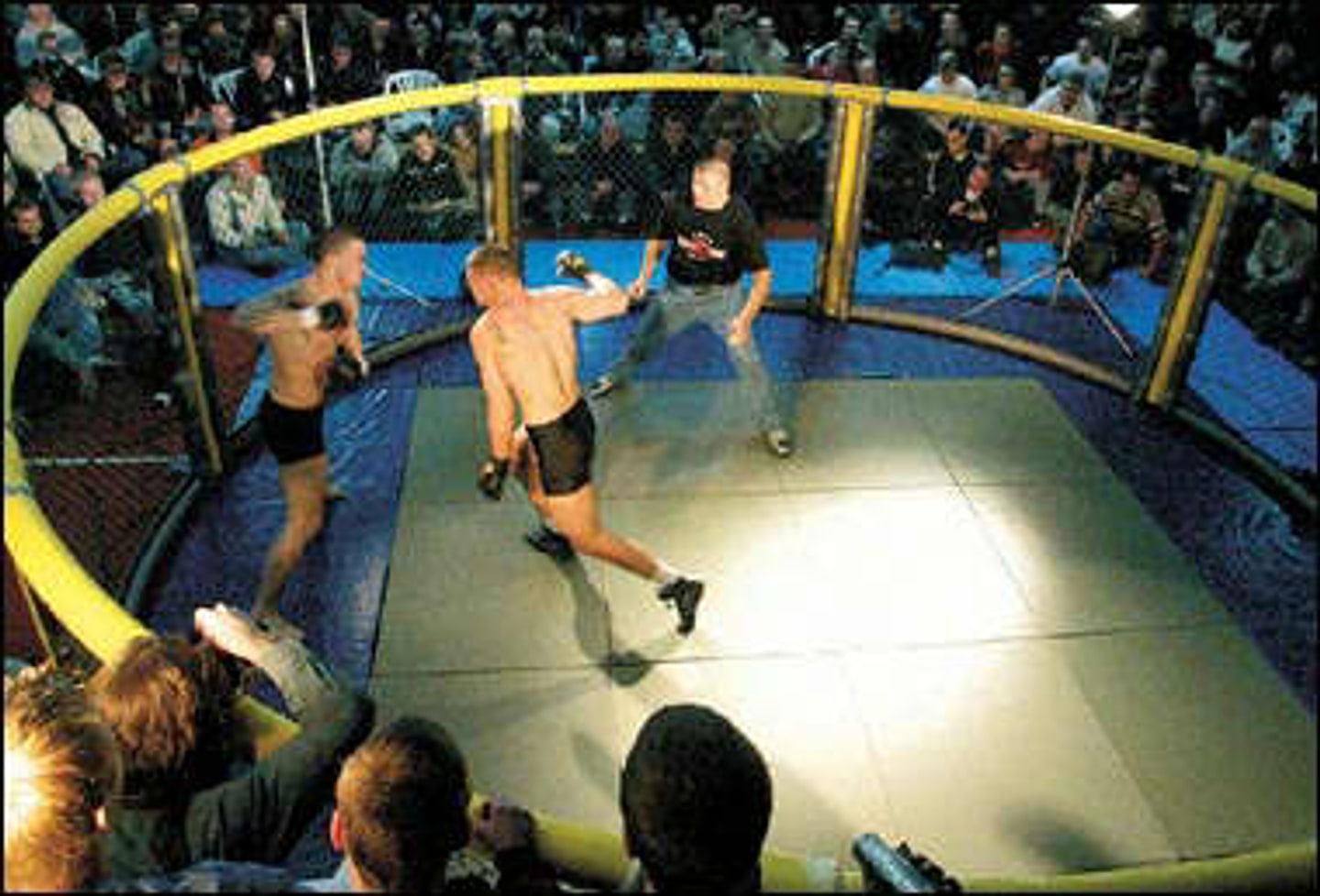
  • The cage seen from above, two fighters and the referee inside, the crowd all around
    The cage from above
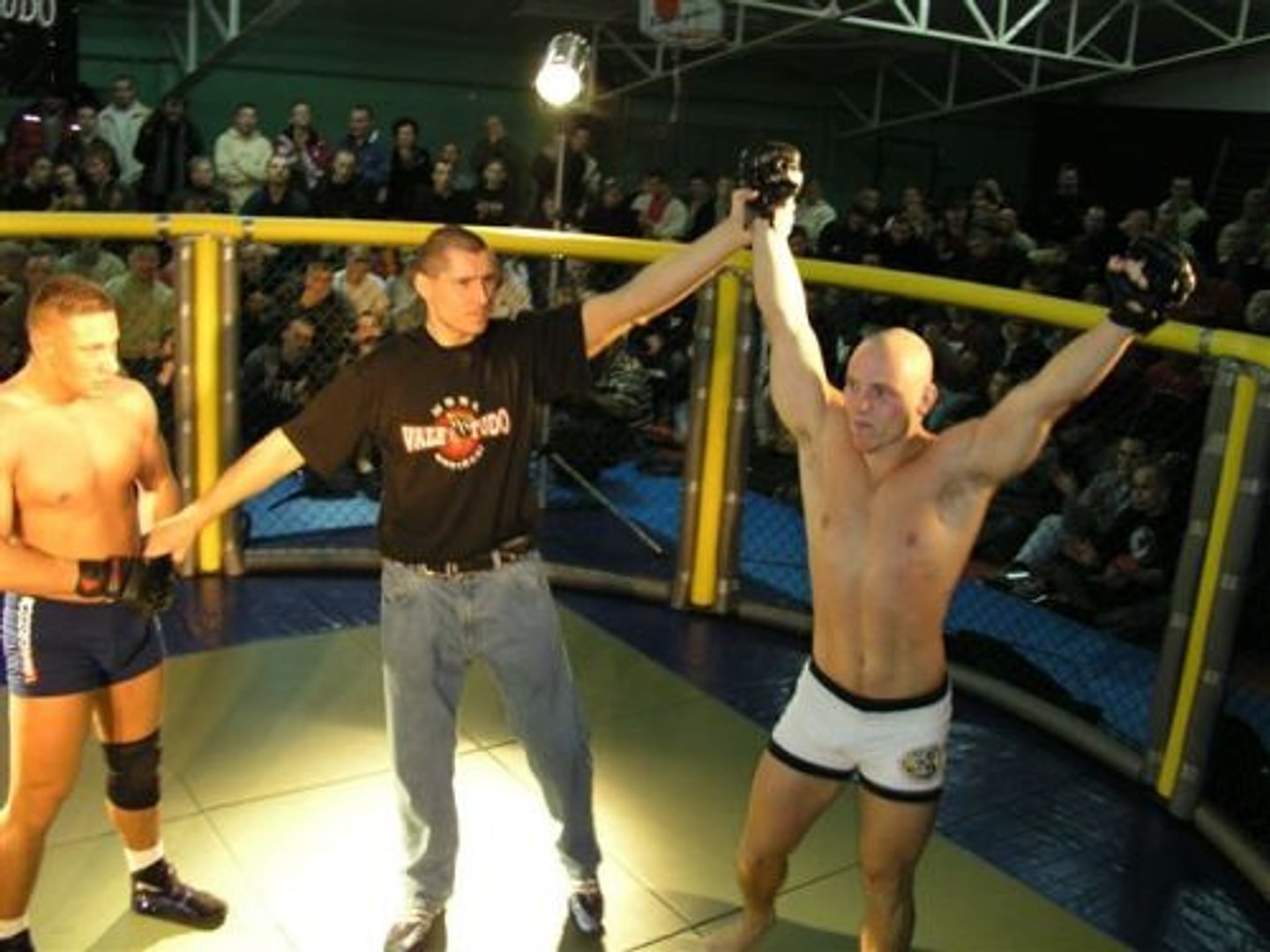
  • A referee standing in the cage between two fighters, raising the arm of one of them
    The result announced in the cage
  • A referee in a Vale Tudo shirt raising a fighter's arm in the cage, a full crowd behind the fence
    The winner announced
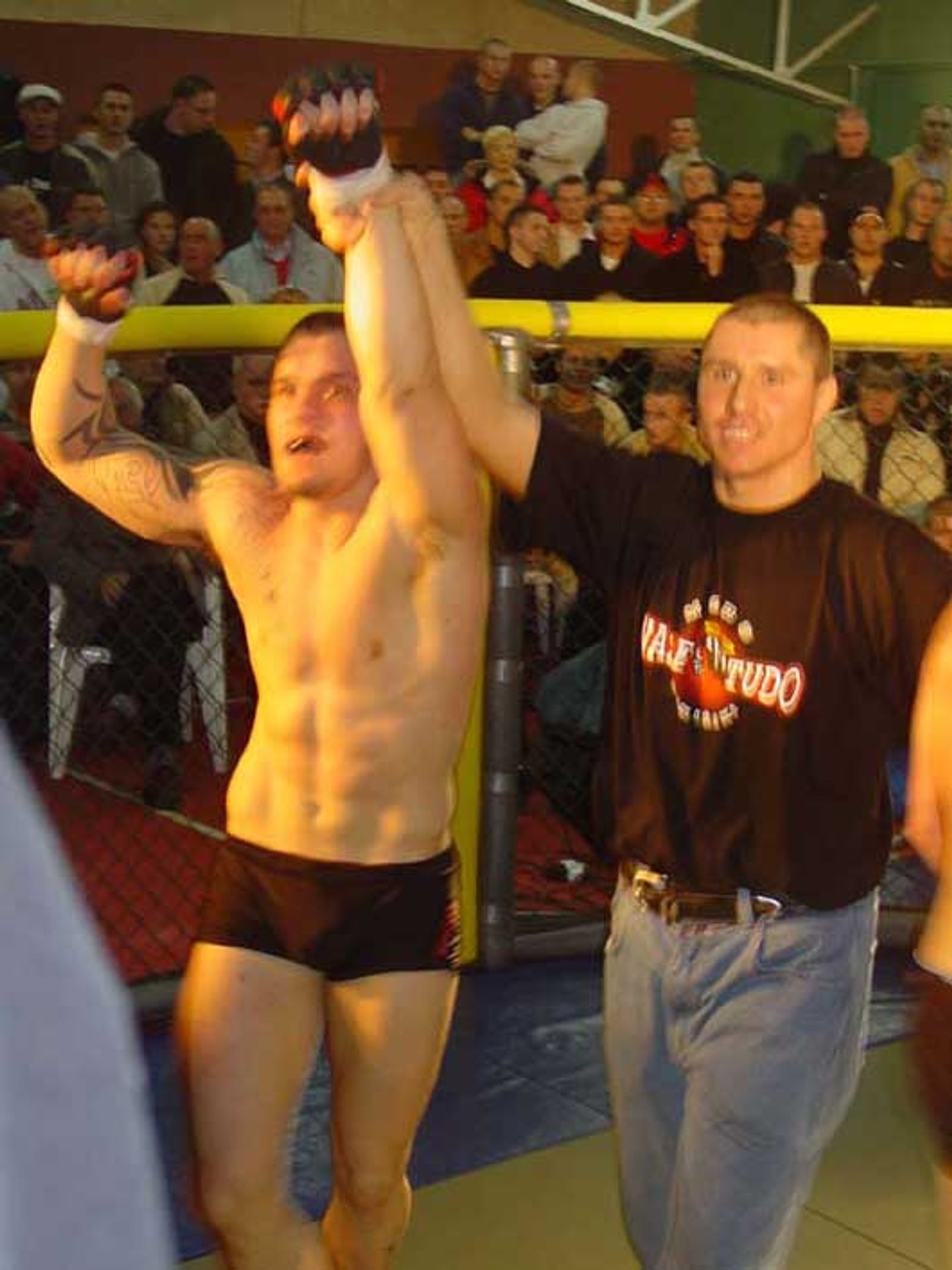
  • A fighter with his arms raised after the bout, the referee and his beaten opponent by the fence
    After the bout
  • A fighter standing in the cage, the crowd pressed tight around the fence, a Vale Tudo banner behind them
    The crowd right up against the fence
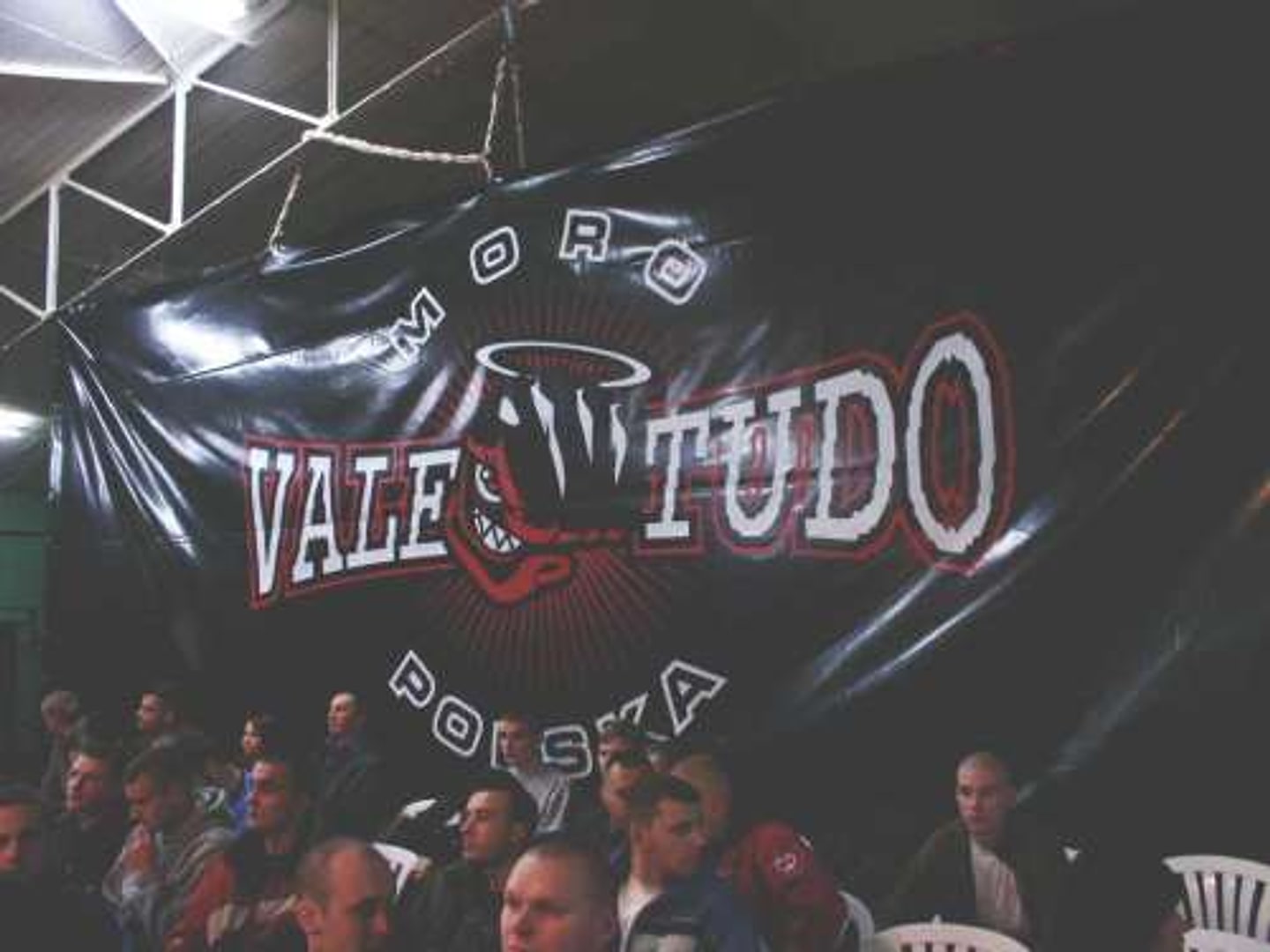
  • A black banner reading Moro Vale Tudo Polska hung above the crowd in the hall
    The Vale Tudo Polska banner
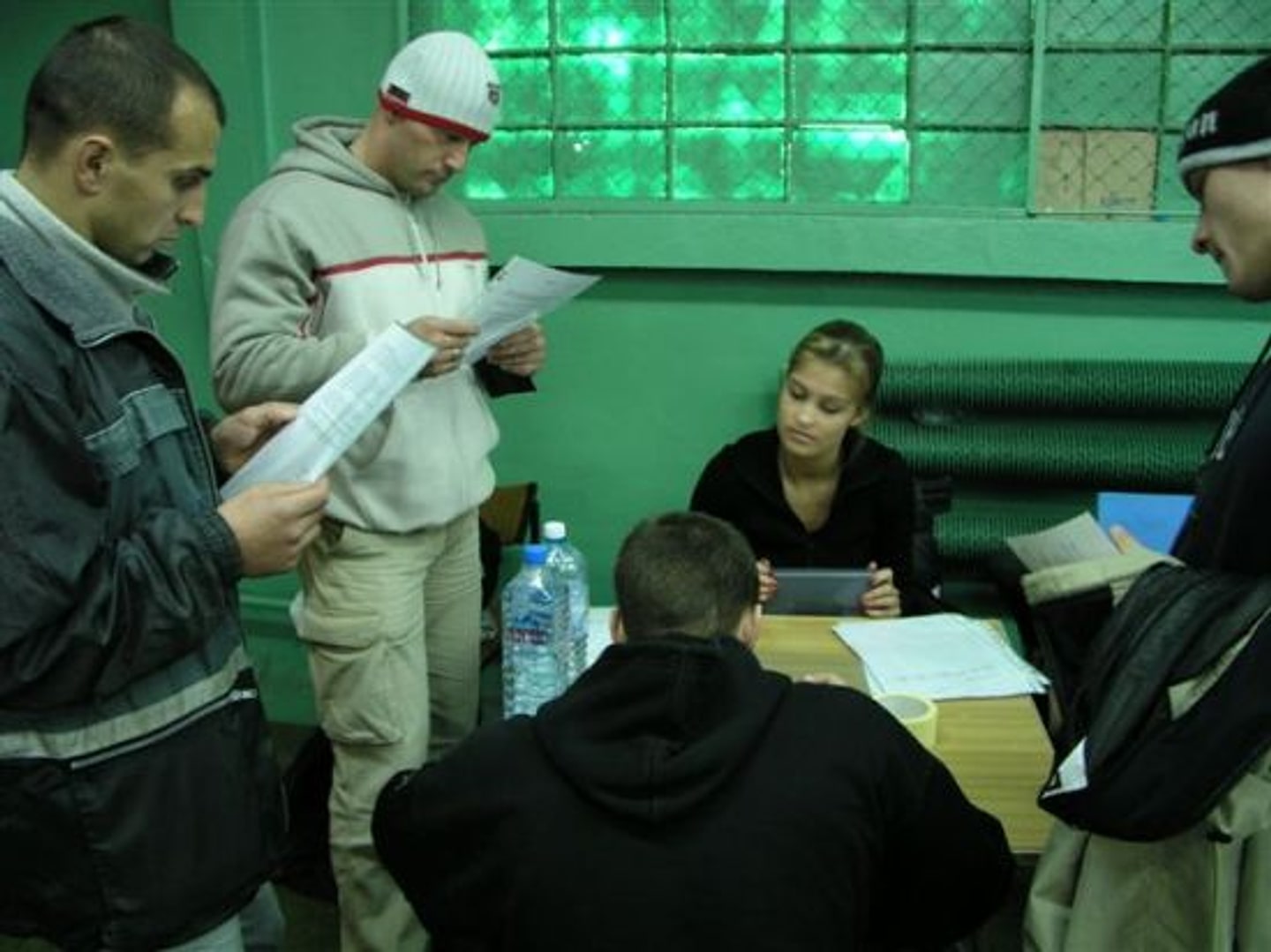
  • Several people leaning over a table with entry lists and paperwork before the tournament
    The table with the entry lists
  • An empty hall before the tournament: the cage in the middle and empty rows of white chairs around it
    The hall a few hours before the tournament

Archive in progress

Do you have photographs, tapes or old magazines?

We are only starting to document this history properly. If any of these is sitting in your basement, call us.
  • Photographs and negatives from the first cage tournaments, from Legia by Fort Bema and from Gwardia on Racławicka.
  • Issues of the magazine „Kulturystyka i Fitness: Sport dla Wszystkich” with reports from the first fights.
  • VHS tapes and recordings from the MMA Polska tournaments and from the Body Show fair.
  • Programmes, posters and entry lists from the first events.
  • A photograph of the first cage, the one made by the blacksmith. According to Mirosław it is still standing in Grudziądz.

Read on

What came next

After this fight came the MMA Polska tournaments, the first rules, weight classes and the first generation of Polish fighters. We have covered that in a separate piece.

ClassesWhatsApp, opens in a new tabCall